Fact Check: Viral Helpline Number for Corruption Complaints to PMO is from Nepal, Not India
Viral Helpline Number for Corruption Complaints to PMO is from Nepal, Not India
Claim :
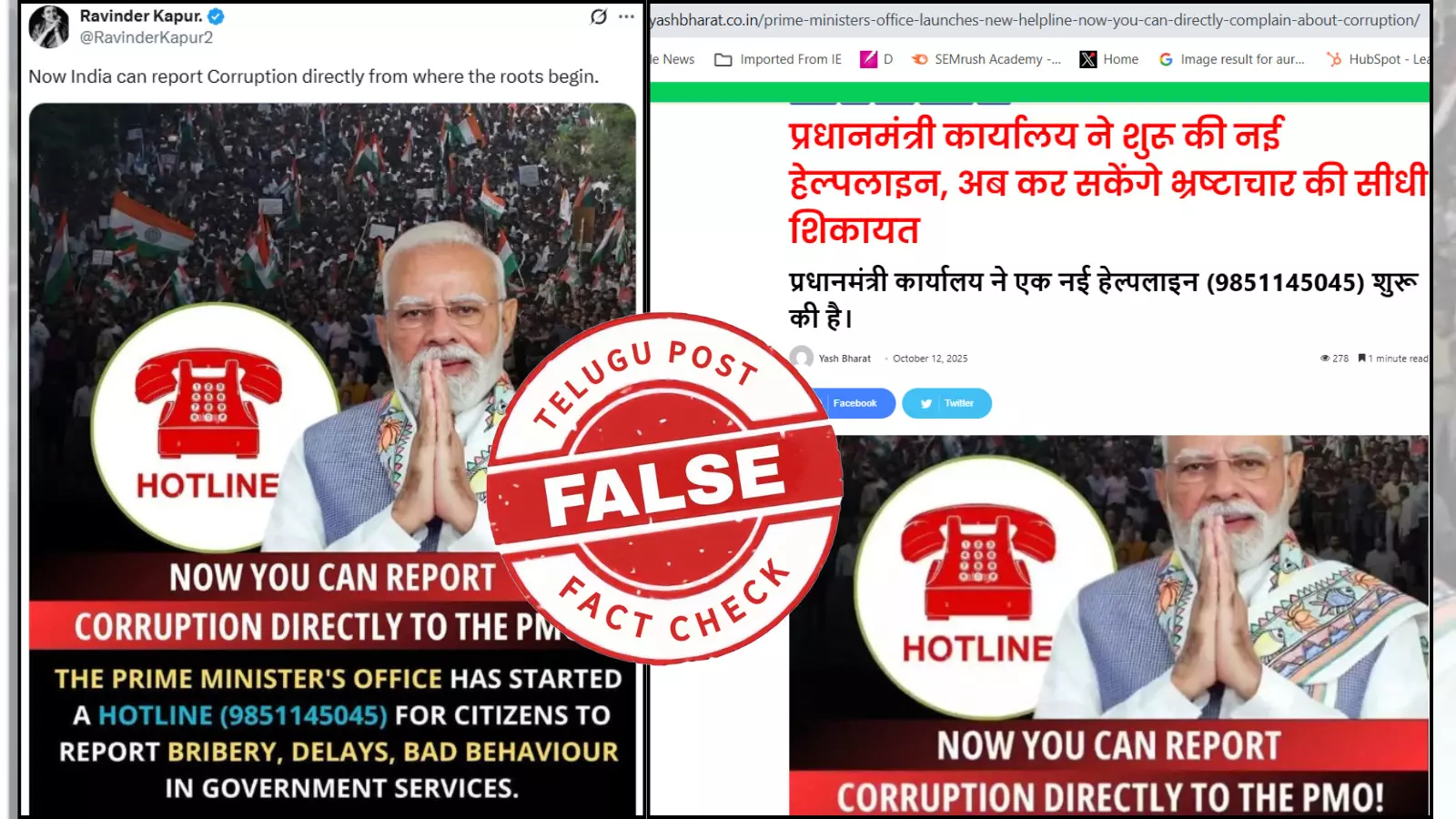
PMO launched a corruption hotline – 9851145045, for Indian citizens to report corruption directlyFact :
The hotline number listed in the image is not related to India, number belongs to the Office of the Prime Minister and Council of Ministers of Nepal
Corruption, the abuse of entrusted power for private gain, remains a significant obstacle to social and economic development worldwide. It erodes public trust, undermines the rule of law, and diverts resources from essential services. In the digital age, misinformation can spread rapidly, including false claims about government initiatives to tackle corruption. This fact-check article examines a recent viral claim about a new helpline for reporting corruption directly to the Prime Minister's Office (PMO) in India.
A viral image and several social media posts, including a tweet from X (formerly Twitter) user and an article published on a website named Yash Bharat, have been circulating with the claim that the Indian Prime Minister's Office has launched a new helpline number, 9851145045, for citizens to directly complain about corruption, bribery, and delays in government services. The posts encourage users to share this information widely to help create a "corruption-free India."
Here is the screenshot of the claim.
Fact Check:
The claim that the helpline number 9851145045 is for reporting corruption to the Indian Prime Minister's Office is false. The number belongs to the Office of the Prime Minister and Council of Ministers of Nepal.
A thorough investigation into the viral helpline number, 9851145045, reveals that it is not associated with any anti-corruption initiative by the Indian government. In fact, multiple sources confirm that this number is a dedicated hotline for the public in Nepal to report grievances related to their government's service delivery.
A Nepali News organisation republica detailed the launch of this hotline by the Office of the Prime Minister and Council of Ministers of Nepal to address issues of misconduct, bribery, or delays by government officials. The official website of the Office of the Prime Minister and Council of Ministers of Nepal also lists 9851145045 as a contact number for citizens to share complaints and suggestions.
While the viral claim is inaccurate, there are several official and legitimate channels for citizens in India to report corruption. The CVC is the apex anti-corruption body in India. Citizens can lodge complaints against central government officials online through its portal (portal.cvc.gov.in). Complaints can also be sent via post to the Secretary, Central Vigilance Commission, in New Delhi. The CVC also has a toll-free helpline number: 1800-11-0180 and another helpline number 1964.
The Lokpal is an independent anti-corruption ombudsman with the authority to investigate corruption allegations against public officials, including the Prime Minister. Complaints can be filed with the Lokpal electronically, by post, or in person. The rules for filing a complaint, known as the Lokpal (Complaint) Rules, 2020, require the complainant to provide valid proof of identity.
Each state in India has its own Anti-Corruption Bureau to address corruption complaints against state government employees. The contact details for these bureaus can be found on their respective state government websites. For example, the Haryana State Vigilance & Anti-Corruption Bureau has a toll-free number (1064 & 1800-180-2022) and a WhatsApp number for complaints.
Some Fact-checking organizations have also debunked this claim, clarifying that the hotline was launched by the Nepalese government.
The viral social media posts and articles claiming that the helpline number 9851145045 is a new initiative by the Indian PMO to tackle corruption are unequivocally false. This number is, in fact, operated by the government of Nepal for its citizens. Indian citizens who wish to report corruption should use the established and official channels provided by the Central Vigilance Commission, the Lokpal, and their respective state Anti-Corruption Bureaus. Spreading misinformation, even with good intentions, can hinder genuine efforts to combat corruption by directing citizens to incorrect and ineffective channels. It is crucial to verify information from official sources before sharing it.